If dramatic
landscapes and mountain hikes are your thing, then Drakensberg is for you. Just
a few hours out of Joburg and next to Lesotho, get ready for stunning mountain ranges, vibrant green valleys and epic travel options for adventure junkies.
This however is not so much a story about endless views and gorgeous countryside. This is about making the most of a travel experience that isn’t quite like the guide book looked.
This however is not so much a story about endless views and gorgeous countryside. This is about making the most of a travel experience that isn’t quite like the guide book looked.
The first
thing my hiking guide told me was ‘there’s no such thing as bad weather, only
bad clothing’. After my much anticipated Amphitheatre hike, I can now verify
that both are in fact very real. Call it bad timing, poor planning or unlucky-
I went for my hike on the very first rain of the season. And boy did it rain. I
am forever grateful to my housemate who threw me her rain jacket just as I was
leaving. If I hadn’t have had that, this would have been a different story all
together- probably involving a 20 year old girl getting hypothermia on top of a
mountain in the middle of Africa.
The rain and
the cold made the hike considerably more difficult. You can imagine my disappointment
to walk all the way to the highest peak over 3000m above sea level only to
see a ‘view’ of thick clouds covering everything more than a metre ahead.
I’m a
photographer at heart. I’d love to show off the amazing lush green landscape
photos I was hoping to get, but the most I saw was a 20-second break in the
clouds when I snapped one photo while descending down a slippery 25metre ladder
in pelting hail.
Apparently
there was an amazing waterfall rushing down the peak of the mountain. Couldn’t
verify that though. I definitely could hear it. Does that count?
|

While I
missed out on the sites, there was something so mystical about walking into the
unknown of the eerie clouds. The challenging weather made the day that little
more adventurous and so much of an achievement at the end. There’s nothing
better than that warm feeling you get after a hot shower and dry clothes
following a long cold day.
I would
definitely recommend the walk itself. Achievable for beginners but not to be
sneered at by more experienced hikers. The rock faces and steep inclines are a
rock-climbers playground.
Even though
I’m sure it doesn’t sound like it, the Drakensberg region is facing a long-term
drought. I guess this means the relentless rain was actually a good
thing. You could see the countryside struggling. The pictures of lush green
mountains I had previously seen were replaced with a dry rusty yellow nearly
everywhere I looked. The water supply in the dam was only holding 15% of its
total capacity and the ‘river’ at my lodge was almost completely dry. The
landscape was still undeniably beautiful, but you can just imagine the
frustration for the local farmers and the tourism industry.
 |
| A once flowing river lies barren |
The
accommodation at Drakensberg was one of my favourite places I’ve stayed. A
gorgeous homely lodge with everything I needed from walking trails, a bar, pool
and spa and even a quiet study area conveniently set up for my 3000 word
over-due law essay. I spent a lot of time exploring the huge property. I’d head
off to the paddocks and hills in the distance accompanied by my new favourite
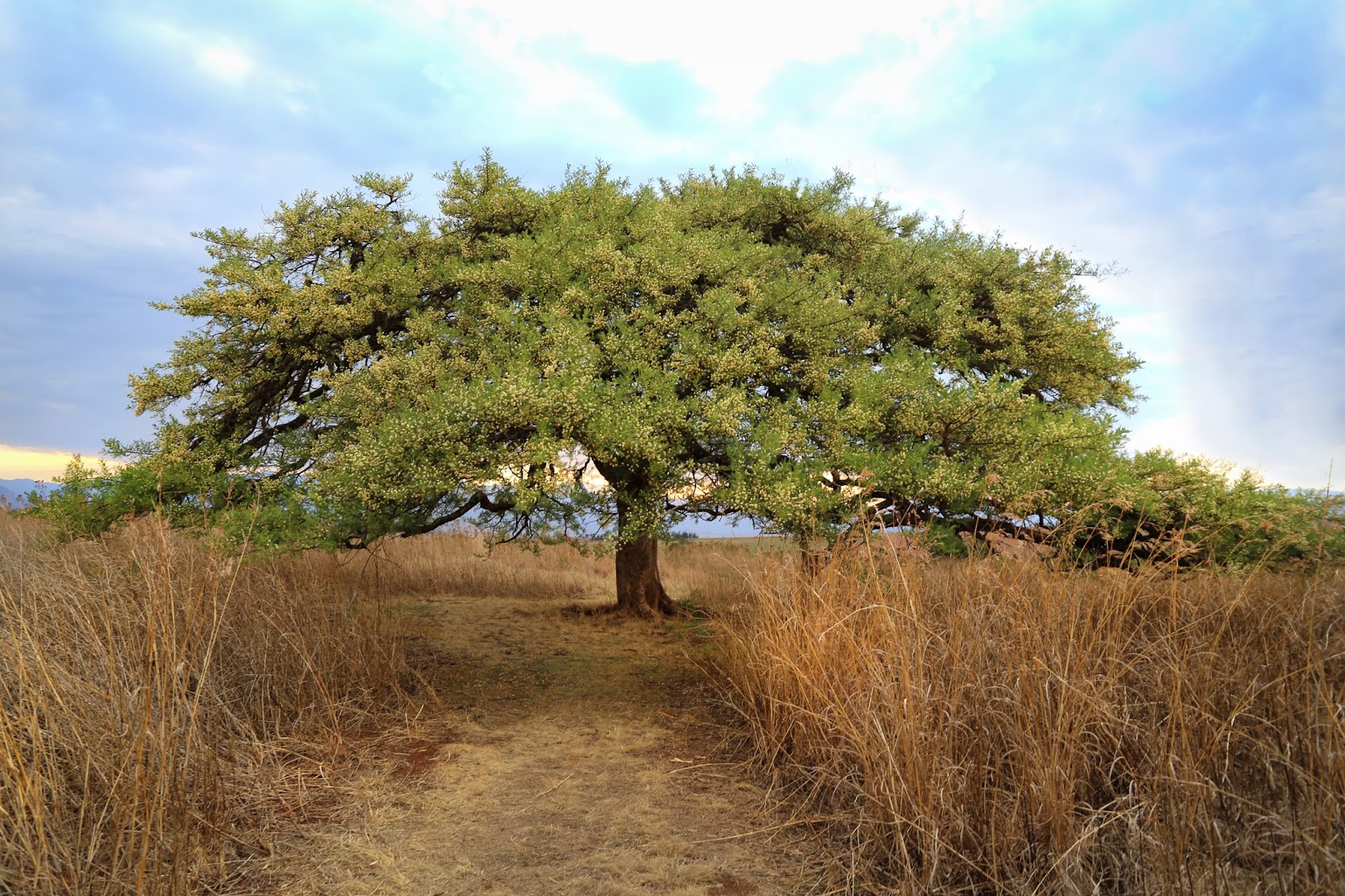
travel companions- two playful local dogs. A rural landscape is one of the
environments I feel most comfortable behind my camera lens. So while I can’t
show off glamourous green views from the top of the Amphitheatre peak, here’s a
few of my favourite snaps from the lodge.



Travel is all
about timing. Had I gone a few days earlier you’d probably be reading about one
of the best views in South Africa.
That’s half the adventure.
I’ll take this as
a reminder to always expect the unexpected and never to base my expectations on
exactly what I see online and in guidebooks. There are never any guarantees. Also, it’s probably not a bad idea to try and check the weather forecast before
a big outdoor trip.
Despite the poor timing, I was still
overwhelmed with the areas of Drakensberg that I saw : homely
towns sprawled through the valleys, fresh country air and a gorgeous rusty terrain.
It’s no
wonder I submitted my assignment late.
I went to Northern Drakensberg in October,
travelling solo with the BazBus. I stayed at, and booked my
hike, with Amphitheatre
Lodge.
This is my third post during my 5-month stay in
Southern Africa. I have also written about power
outages and a weekend in Lesotho.
Follow me as I try to convince you to pack your
bags and get on a plane to Africa, before I make my way to South East Asia (for
a third time) in 2016.
When I'm not writing, photographing, exploring and studying overseas, I keep myself busy posting about Melbourne life @ ditchedinmelbourne
When I'm not writing, photographing, exploring and studying overseas, I keep myself busy posting about Melbourne life @ ditchedinmelbourne


